Understand and quantify your most extreme risks.
OpenEVT brings cutting-edge extreme value statistics into practice, helping organisations quantify rare and high-impact events, develop robust risk models, and turn the latest statistical research into operational tools.
What we offer
Services
OpenEVT provides expert statistical consulting in Extreme Value Theory (EVT) — the branch of statistics concerned with rare, high-impact events at the tail of the distribution. Our focus is on practical implementation: translating contemporary statistical research into working models, software, and analyses that organisations can use operationally.
OpenEVT bridges the gap between cutting-edge EVT methodology and the problems that engineers, risk analysts, and scientists face in practice. Whether you need a model for extremal dependence, an automated pipeline, or a bespoke deep learning framework, OpenEVT delivers working solutions.
How extreme could it get?
Using univariate techniques to quantify the extremal risk for a given variable. How high should one build a flood defence? What temperature extremes can one expect?
What happens when hazards occur together?
Helping you to assess the combined risks from multiple hazards, or variables. Do extremes of multiple variable tend to occur simultaneously? How does one quantify and summarise joint/compound risk?
Can we build this into an operational tool?
Delivering end-to-end EVT pipelines, from methodology selection to production-ready code. How can one automate a modelling procedure? How does one ensure our process can be completed quickly and efficiently?
How is risk changing?
Modelling changing extreme behaviour over time caused by, e.g., climate change. How is the extreme risk changing? Is current infrastructure reliable for a future climate?
Could AI improve our understanding of extreme risk?
Implementation of contemporary deep learning and machine learning approaches for tail estimation. Is deep learning necessary for our modelling framework? How does one build AI into an operational tool for modelling extremes?
How do we generate a large catalogue of feasible extreme events?
Using generative modelling techniques to generate synthetic catalogues of extreme events, i.e., stochastic event sets. How does one generate 'unseen' extreme events from a finite sample size? What generative technique should one use for simulation?

Who we are
About OpenEVT
OpenEVT was established by Dr. Callum Murphy-Barltrop in 2026 with a singular mission: to make modern statistical tools for extreme events transparent, practical, and directly applicable for organisations. Whether addressing climate extremes, compound flood risk, or engineering stress limits, OpenEVT helps organisations understand and quantify what lies at the edge of the distribution.
About Dr. Callum Murphy-Barltrop
Callum is a statistician specialising in extreme value theory, with a PhD from Lancaster University, three years' postdoctoral research experience at TU Dresden & ScaDS.AI, and direct industry and consulting experience (Fathom, the ONR, FSD GmbH). His motivation for founding OpenEVT was to help make contemporary extreme value modelling techniques more accessible to the world. With OpenEVT, he hopes to help organisations develop working implementations and solutions for problems involving extreme events — closing the gap between what contemporary EVT can do and what most practitioners actually use.
He is passionate about demystifying EVT and making cutting-edge methods accessible for practical applications, and is committed to developing open-source tools so that state-of-the-art statistical software is available to all. He has published 18 journel articles and preprints, spanning a wide range of EVT topics.

Case Studies
A selection of projects illustrating the methods OpenEVT brings into practice.
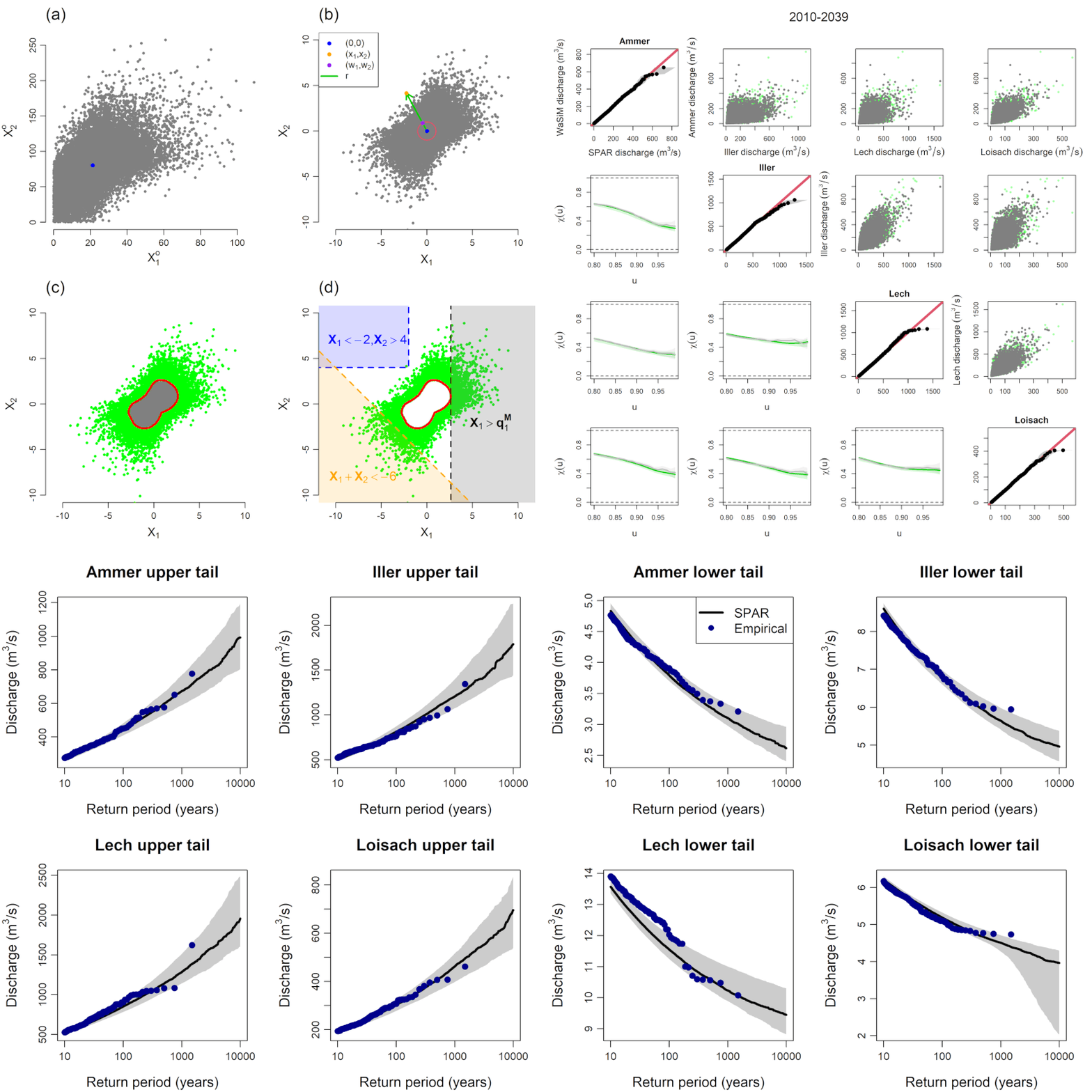
Exploring Climate Change Effects on Concurrent Floods and Droughts via Statistical Deep Learning
We use deep learning to model concurrent river discharge extremes across four catchments in the Upper Danube basin. We find that both compound flooding and concurrent drought events are becoming more likely in the Alpine Foreland under climate change.
Read preprint →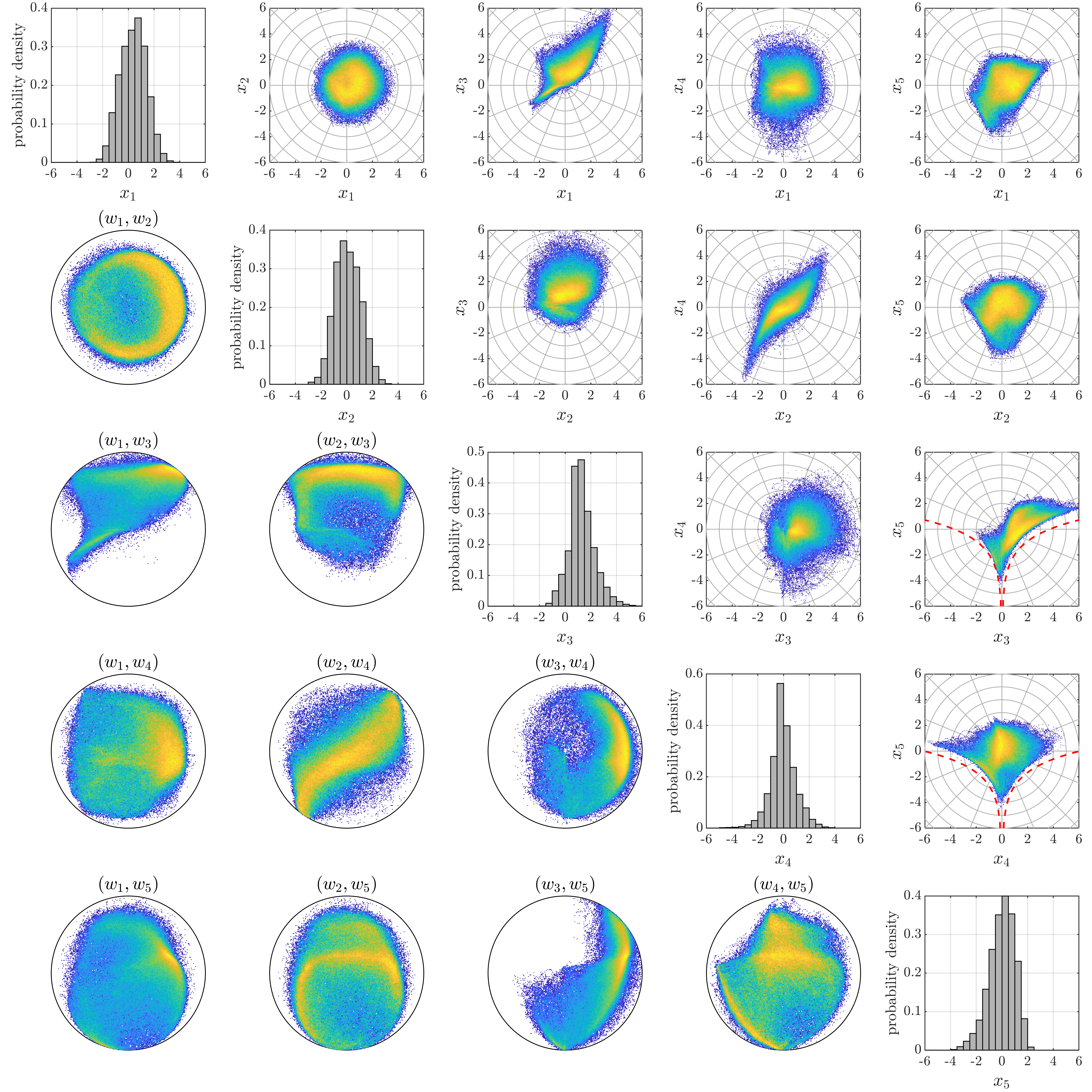
Deep Learning Joint Extremes of Metocean Variables Using the SPAR Model
We propose a deep learning framework for estimating joint extremes of offshore environmental variables: wind speed, direction, wave height, period, and direction. Our framework addresses the limitations of existing works and allows for a more robust, detailed risk assessment for offshore structures.
Read paper →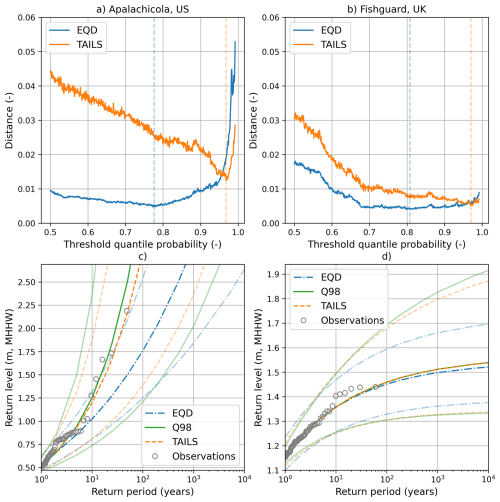
Automated Tail-Informed Threshold Selection for Extreme Coastal Sea Levels
We introduce an automated threshold selection method for the peaks-over-threshold approach. Our method improves the estimation of tail risk for coastal flooding assessments.
Read paper →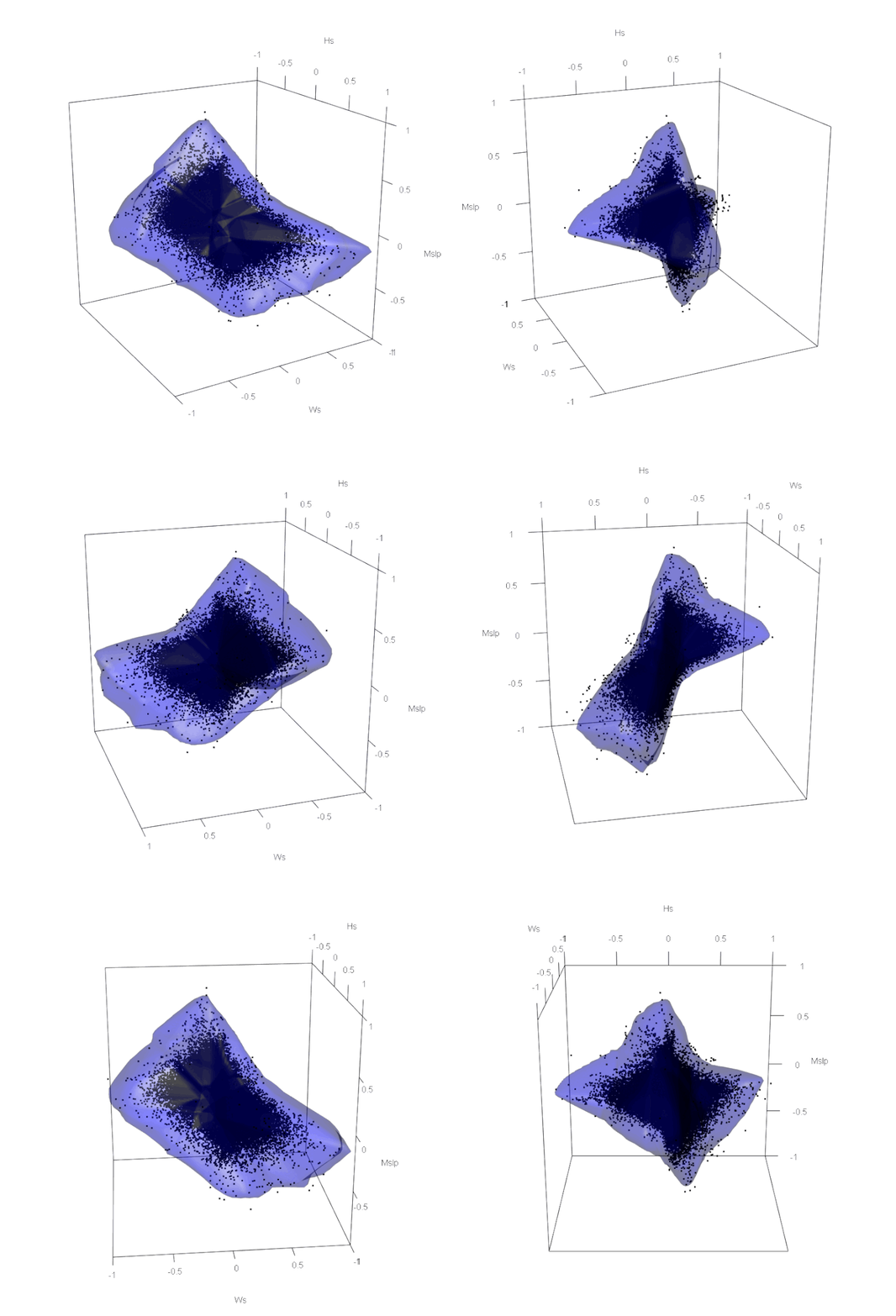
Deep Learning of Multivariate Extremes via a Geometric Representation
We introduce one of the first deep learning approach to modelling multivariate extremes, and show that our model assists with risk assessments for offshore structures in the North Sea.
Read preprint →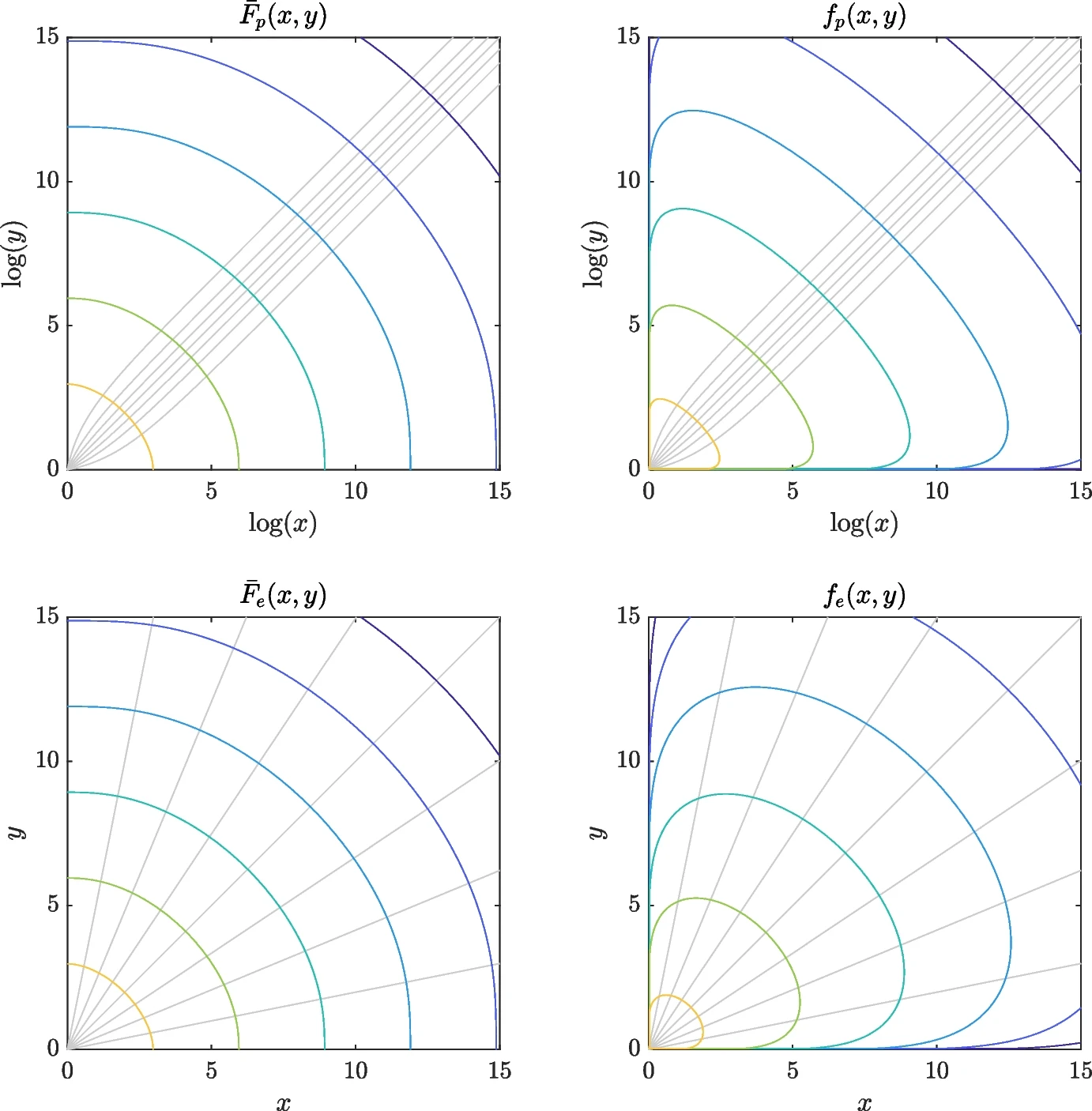
Inference for bivariate extremes via a semi-parametric angular-radial model
We introduce a parsimnious and flexible modelling approach for multivariate extremes, termed the SPAR model. We show that this model captures joint behaviour across many combinations of natural hazards, allowing for reliable and straightforward modelling of compound events.
Read paper →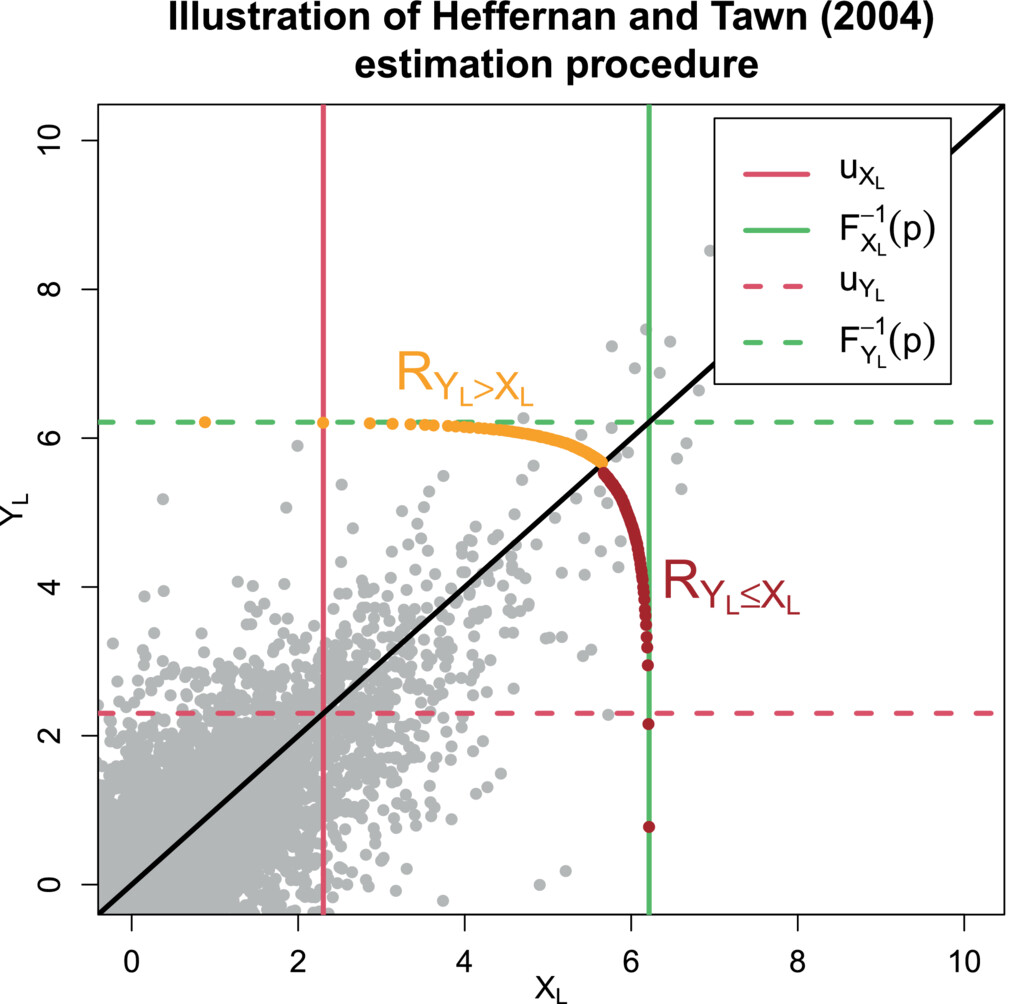
New estimation methods for extremal bivariate return curves
We introduce novel methodology for estimating joint return periods, or return curves, in two dimensions, and show how these techniques can be used to quantify, summarise, and visualise risk for multiple hazards.
Read paper →Training
Professional Training in EVT Methodology
A key part of OpenEVT's mission is making extreme value methods genuinely accessible — not just as a consulting service, but through direct knowledge transfer. OpenEVT offers bespoke training for practitioners and teams who want to build in-house capability in EVT and related methods. We offer a variety of EVT topics, and our program lengths range from half-day to multi-day courses. Our courses are suitable for anyone with a basic working knowledge of statistics, e.g., engineers, risk analysts, data scientists.
Foundations of EVT
An introduction to univariate extreme value theory: block maxima, peaks-over-threshold, GEV and GPD distributions, return levels, and practical threshold selection.
Multivariate/Compound Extremes
An intermediate course covering extremal dependence, joint probability analysis, angular-radial models, and practical approaches to estimating joint risk.
AI for EVT
An advanced module covering deep learning approaches to tail modelling.
Bespoke Team Workshops
Custom training sessions designed around your organisation's data, sector, and specific challenges — from a half-day introduction to a multi-day deep dive.
Interested in training for your team? Get in touch to discuss formats, content, and scheduling.

Our commitment
The 10% Pledge
OpenEVT is committed to donating at least 10% of its profits to highly effective charities, in line with the principles of Giving What We Can (GWWC).
What we've committed to
OpenEVT pledges to give at least 10% of its net profits each year to organisations that can most effectively use those funds to improve the lives of others. We choose charities through GWWC, helping to prioritise those with the greatest measurable good.
Learn about the 10% Pledge →About Giving What We Can
GWWC is an international organisation dedicated to inspiring and supporting more effective giving. Founded in 2009 by Oxford philosophers Toby Ord and Will MacAskill, GWWC promotes the 10% Pledge — a public commitment to give at least 10% of income to the organisations best placed to help others. More than 11,000 people in over 95 countries have now taken the pledge.
GWWC recognises that not all charities deliver equal impact, and provides research-backed guidance to help donors direct funds where they will do the most good — across global health, poverty alleviation, animal welfare, and the long-term future.
Visit givingwhatwecan.org →Get in Touch
Interested in working together, discussing a project, or finding out more about training? Get in touch — an initial conversation is always free.
Email OpenEVTor contact us directly via em.notorp@tvenepo